
At Southern Arizona ENT, Dr. Ray has been helping in Tucson people just like you to hear better since 2006. We specialize in diagnosing and treating a wide range of hearing related issues. This can be done through a variety of solutions including specialized treatment options and amplification methods.
We utilize a series of tests designed to help measure your hearing levels and to assess what challenges we may need to overcome. Once we’ve properly established where your hearing capabilities are right now, we can begin to build an individual plan with you to restore your hearing. This could be a series of treatments in combination with digital amplification, or treatment to heal damage you may have sustained to parts of your hearing.
We’ll work with you to determine what works for your budget and lifestyle and develop the perfect solution for you.
Eustachian Tube Procedure
Balloon Dialation
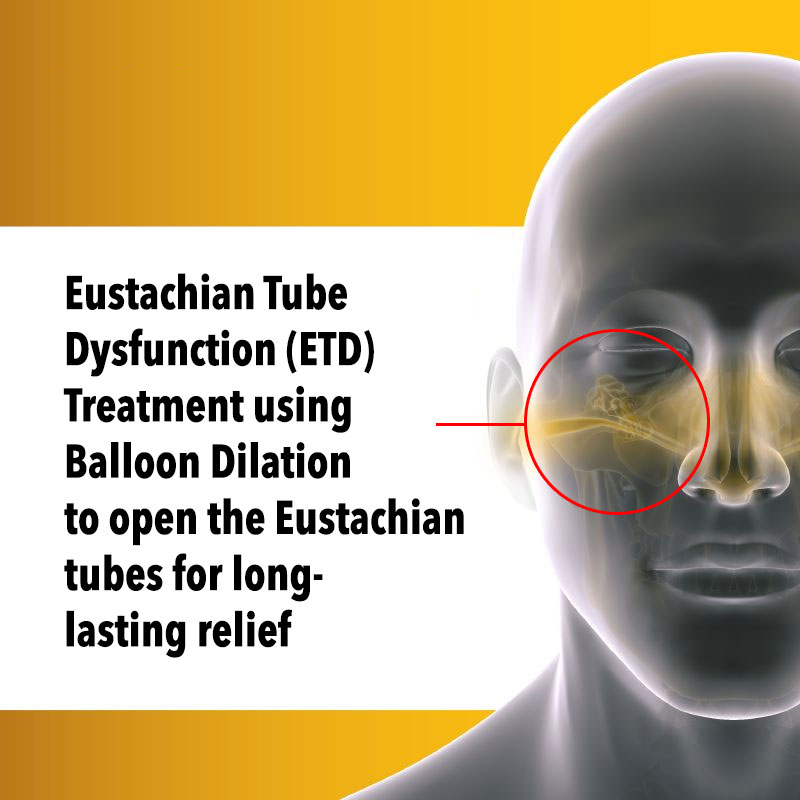
If you suffer from ear pain, feeling of fullness, ringing or popping sounds, you may consider a balloon dilation procedure to restore function to your hearing. Balloon dilation is a safe, effective, and minimally invasive treatment option for Eustachian tube dysfunction (ETD).
Typically when you yawn, chew, sneeze or swallow, your Eustachian tubes, which are small passageways that run through the middle ear and upper throat – open to keep pressure and fluid from building up.
Those with ETD instead experience a constant feeling of “fullness” or pain along with muffled sounds and may or may not include popping or ringing.
Balloon dilation is a safe and effective treatment where the physician at Southern Arizona ENT will insert a small inflatable device through the nose and into the Eustachian tube. The balloon is then gently inflated for several seconds and then deflated in order to restore function. This is performed very quickly and under local anesthesia.
Examples of Conditions We Treat
Earwax Blockage
Earwax is a normal part of the body’s defense system that lubricates and maintains the outer part of your ear canals. Normal it’s very helpful and protects the skin from irritation and water. Most people naturally get rid of earwax and is washed away during normal hygiene routines. But in other cases, the buildup stays within the ear and when this happens it can cause several issues.
The symptoms of an unhealthy amount of earwax buildup include:
- Sudden or partial hearing loss
- Tinnitus (ringing or buzzing in the ear)
- Feeling of fullness in the ear
- Earache
If the amount of earwax continues to build up and is not removed, it can lead to infection which can cause severe pain, drainage from the ear, fever, dizziness, and an unpleasant odor coming from your ear.
We remove excessive wax using a small curved instrument called a curette, and may use other techniques such as suction or flushes with warm water and gentle removal. If you find that earwax buildup is happening frequently, it’s probably a good idea to talk to your physician about your experiences and we may want to ensure it’s not another issue that’s causing additional regular buildup, which could be a larger problem we could solve before it becomes a severe health issue.
Ruptured or Perforated Eardrum
A ruptured or perforated eardrum occurs when a hole or tear happens in the tympanic membrane of the eardrum. Normally, while very painful, a ruptured eardrum heals on its own within a few weeks, but it’s usually a good idea to see an ENT specialist to ensure no additional problems or infection is present. In addition to pain, you will likely experience hearing loss and symptoms such as tinnitus as the eardrum heals.
In most cases no specific treatment is necessary. There are cases however where the rupture doesn’t heal properly on it’s own. In these cases we may look at several treatment options to help the body complete the repair, which might include surgery or an eardrum patch.
Tinnitus
Tinnitus is the perception of often high-pitched noise that is heard in the background as you go about your daily life. It’s estimated that as much as 20% of Americans surveyed experience some form of tinnitus. While tinnitus may be related to hearing loss, it can also be associated with other issues that should be checked out by a doctor.
Initially, we’ll perform an audiology test to determine if it’s simply a symptom of hearing loss. We’ll then examine your ears, head, neck, and throat to ensure there are not other issues occurring we should be treating.
Treatment will depend on how severe the tinnitus is. Depending on the cause, there is a wide range of possible treatment options from as simple as removing an earwax blockage to surgical options.
Acoustic Trauma
Acoustic trauma is an injury to the inner ear, usually due to a sudden extreme loud noise, such as an explosion. Trauma can also occur by exposure over a very long period of time with loud noises such as machinery. If the trauma is severe enough, you may even rupture the eardrum.
Hearing Loss
Roughly a quarter of Americans over the age of 55 have some degree of hearing loss. Loss of hearing naturally occurs as we age. We can however suffer from hearing loss earlier or in much greater severity by long-term exposure to loud noises, such as music, machinery, construction and other occupations that are louder than office jobs for example. These are noise-induced hearing problems.
Trauma to the ear or damage to the inner ear nerve endings are referred to as sensory or sensorineural hearing loss, which affect the ability of sound waves to get into the inner ear.
You may also be experiencing loss where sound waves are unable to make it into the inner ear, such as blockages in the ear canal, fluid in the eardrum, perforations of the eardrum, and problems with the tiny bones of hearing. This is called conductive hearing loss.
How we treat hearing loss is mostly a factor of determining exactly what has caused the hearing loss you are experiencing and take into consideration your unique situation so that we can create a treatment plan that is unique to you.
Make an appointment today
If you or a loved one is struggling with their hearing, we’d love to hear from you. Give our friendly staff a call today to ask any questions you may have and we can also set an appointment to come to our office.